Friday, 28 September 2012

The beauty of going on a trip with strangers

After my experiences in Peru with altitude and dehydration, and on the advice of some seasoned Kilimanjaro guides, I decided to try out another high altitude (above 3000m) trek before embarking on Kili. I recently got the all-clear from my medical team to tackle Kili so this was the last hurdle to overcome before booking the trip. When I mentioned this to someone recently, they were stunned - not that I got the all-clear, but that I have a whole medical team to look after me, not just a GP! In case you're interested, I have a GP, a diabetes consultant, a retinal specialist, and a pump-trained DSN, all of whom I see regularly, and should I require it, I also have a chiropodist, dietician and psychiatrist at my disposal - that's one good thing about having a serious medical condition, there are specialists hovering around your every move! Anyway, I digress. Finding a week free in my busy schedule, and wanting somewhere fairly cheap and not too far away, I decided on Mt Toubkal in Morocco. The trip involved a week in the Atlas Mountains, with the ascent of Toubkal (4216m) as the toughest part. Apparently it's ranked #280 of 953 things to do in Morocco by Lonely Planet travellers, though I can't imagine 279 things to do in Morocco that would be more fun. 


The trek was classified by Exodus as a C grade trip, so I knew it would be tougher than the previous treks I've done with them, which had all been classified as B, although the most recent one was definitely (even according to the guide) more like a C grade, with long days in the mountains and a lot of ascent. This time my fears were slightly different from those on the Inca Trail. The camping aspect didn't bother me at all, in fact I was looking forward to that above all else, and perhaps surprisingly, the altitude wasn't a major concern as I figured I now knew how to deal with it after my Peruvian experience. All I needed to do was drink lots (of water) and then drink some more, and try not to think about the horrors of having to get out of the tent in the freezing cold at night and wander around in the dark on top of a precarious cliff edge to pee. I thought if I could avoid getting ill, everything would be fine. However, as I monitored the weather forecast in the preceding days, and saw the thermometer sitting at a toasty 45 degrees in Marrakech (an extra 10 degrees hotter than usual for this time of year) I realised that the heat could actually be my biggest problem. How was I going to keep my insulin cool on trek? And what would happen if I couldn't? All my spare insulin would be equally hot - and ruined. Because our kitbags were being transported by mule this time, there was also the danger that something would happen to my medical supplies. What if a mule were to fall off the mountain or decide to escape? I also suspected that the muleteers would throw my bag around even more violently than the Royal Mail, so everything needed to be bomb-proof if my medical supplies were to remain intact. More about those aspects in a separate post about managing diabetes in hot weather on a mountain, but in summary, I managed what I consider to be excellent diabetes control under the circumstances (actually way better than I often get at home!).

It turned out that fitness was actually my biggest problem on the trek. Apparently we had an unusually fit group, and it was rather disconcerting to be the slowest person on the tough days, not just uphill but sometimes downhill too! I soon realised that I needed to go at my own pace, even if it meant holding up the others, but it made me feel terribly guilty to do so. On the day we summitted Toubkal (more about that in another post) I was devastated when we finally got back to base camp at the thought that I had been slowing everyone down and they were annoyed at me. I was assured by a couple of people later that this wasn't the case, and that they were just concerned if I was OK, but I'm still not so sure. One thing though, I was definitely feeling the effects of dehydration and altitude (which oddly no one else seemed to be) despite making a conscious effort to drink a lot. Another lesson learnt. What I think is a lot of water is not nearly enough. And going to the loo in the freezing cold on the edge of a mountain in the pitch black at night with mules wandering around - no matter how many times - is still better than feeling ill from ascending a mountain when dehydrated. Even though it never feels like it at the time. 

Despite the fact that summiting Toubkal was the toughest thing I think I have ever done, I'm glad I did it as it made me realise that I have some hard work to do before February, but at the same time these things are achievable if you have the right attitude. I never doubted for a minute that I would get to the top of Toubkal, no matter how long it took and how annoyed with me everyone else was for being slow. I know this is the most important thing I'll need when climbing Kili - that determination to succeed no matter how much pain it involves. I did this trip and I'll do Kili, not to make friends and have a good time, but for myself and for the greater good of JDRF. In addition, I learnt a lot, both about myself and about trekking up mountains, and have some wonderful memories. The thing I find hardest is remembering this and trying not to spend so much time and effort worrying about what other people think. Even if everyone hates me afterwards, well that's the beauty of going on a trip like this with strangers - they never have to speak to me again if they have got fed up with me. I still hope they like me though.


Diabetes on a mountain

One of the biggest worries about my trek in Morocco was the heat (a toasty 45 degrees in Marrakech, though progressively cooler as we got higher). How was I going to keep my insulin cool on trek? And what would happen if I couldn't? All my spare insulin would be equally hot - and ruined. Because our kitbags were being transported by mule this time, there was also the danger that something would happen to my medical supplies. What if a mule were to fall off the mountain or decide to escape? I also suspected that the muleteers would throw my bag around even more violently than the Royal Mail, so everything needed to be bomb-proof if my medical supplies were to remain intact.


I decided to pack all my insulin in a Frio bag, except it turned out that the Frio bag I have is actually designed for an insulin pump (a rep gave it to me about 15 years ago, and I've never used it) so not really designed to fit several vials of insulin. Removing the packaging meant I could fit one vial and some cartridges in the pouch, the other vial I had to just hope for the best. The beauty of a Frio bag is that it's activated by cold water so I could reactivate it mid-trek if necessary. I then put this in a Ziplock bag, wrapped it in a spare buff, and wrapped that in my waterproof jacket which lived at the bottom of my daysack all week on trek. The rest of my medical kit I packed (well-wrapped) in the middle of my kitbag wedged in between clothes, and crossed my fingers. You have to live life a little dangerously on these trips or you'd never get anywhere. 

As for the pump itself, I used a SpiBelt (see pictures) to attach it around my waist under my tshirts (as I usually do) and hoped it would stay cool enough. These precautions turned out to do the trick perfectly. I also packed a spare blood glucose meter and strips in my kitbag (after reading Jerry Gore's story about his meter packing up while climbing in the Alps), although - like Jerry - I only had a handful of strips that fitted that meter, so I was trusting to luck again that I wouldn't need it from day 1! Based on previous experience, I reduced my basal insulin on the trek to approximately 50% during the walking itself, starting an hour before we set off in the morning and finishing, where possible, an hour before we finished. I then set it to 70% for the night and 80% for the rest of the daytime when not walking. This strategy - with a bit of fine tuning along the way - worked incredibly well and I had the best blood sugar levels of any trip I've done! I only needed to adapt a little when there were long downhill sections (where I didn't use so much energy), and kept the Haribo handy in my waistbelt pocket for regular small topups on the climbs. Luckily, we had an identical breakfast of (pretty horrible) porridge every morning, for which I bolused my usual amount but over an hour instead of all at once, and again this worked perfectly. For lunch I reduced the bolus by 50% but without the square wave, and this also worked well.


The fact that most of the meals were relatively low in carb with lots of vegetables (mainly carrots), and were quite consistent (some would say boring) actually helped a lot and I had pretty good control throughout with no major lows or highs until, oddly, the day after the trek ended when I had some terrible lows! Figuring out how to gradually raise the basal back to normal seems to be a black art - for the first few days you're obviously expending less energy but your body still burns a lot of fuel until it gradually begins to realise it doesn't need to. Something to be wary of next time. But all in all, a great success diabetes-wise, which was actually my biggest fear. Fitness-wise, another story....I definitely need to step up the training before Kili! 


Sunday, 12 August 2012

Wings of Kilimanjaro


As if climbing Kili wasn't bad enough, imagine doing it with a full paragliding kit on your back too. That's what 200 other people will be doing in early 2013. According to http://www.wingsofkilimanjaro.com, a group of adventurers from every corner of the globe will come together for a once-in-a-lifetime, world record-breaking event to climb and fly from the “Roof of Africa” - Mt Kilimanjaro, the highest free-standing mountain on the planet, and in doing so will raise over a million for charity. Makes my attempt just to climb it seem a bit puny in comparison.

Squash Falconer (how I love that name!) has just come back from a reconnaissance trip for this event, which she's  blogged about. Sounds like an immense coordination effort, but what a spectacle it will be! Idly browsing their website, I stumbled on the dates for their proposed attempt, and discovered that they aim to do it on Feb 5th, although there's a window of about a week, depending on conditions. Coincidentally, not only is that my birthday, but it's the exact week I'll be climbing Kili. So with any luck I'll not only see them make their flight, but maybe even get to climb with some of them or share base camp with them. I actually held a club paragliding license nearly 20 years ago, but haven't renewed it since. Not sure that blind people would be allowed to paraglide these days anyway. Or at least, not solo. I think I'll stick to just climbing Kili for now.

Thursday, 5 July 2012

Inspiration part 3

In my previous 2 posts about inspiration, I was somewhat flippant amongst the serious stuff. But recent events have provoked this post about the most important source of inspiration for this trip, and something I actually had in mind when I first decided to take on the challenge. Two weeks ago, my father, a type 1 diabetic for nearly 60 years, died from a combination of diabetes-related complications. In the previous 18 months, he had had both legs amputated below the knee and latterly, a finger. By the end, he had gangrene, scepticaemia, pneumonia, heart problems and very little circulation anywhere.

Despite having been diagnosed with diabetes in the 1950s when treatment was rudimentary, to say the least, he never complained and, rightly or wrongly, actually went to great lengths to not let on that he even had it, until more recently when things got tougher. But more importantly, he never let it stand in his way, and when I was diagnosed with it aged 8, in the 1980s, he was quick to quash any complaints I might have about getting the disease. He was an avid traveller and sportsman, and always encouraged me to do the things I wanted to, regardless of the possible dangers. I'm sure secretly he worried when I set off to New Zealand on my own for 8 months with nothing but a backpack, but by the time I'd told him I'd been bungy jumping, glacier climbing, and completed a week's paragliding course, it was too late...

I visited him in the hospice about 3 days before he died, and we talked about my plans for Kilimanjaro next February. He was full of admiration and despite knowing full well that he only had a few days to live, insisted that he would not die until I came back from Kili and told him all about it. I replied that I'd better change my flight and go the next day, but he just laughed.

Memories of my dad and the courage and determination with which he faced adversity in life will be what motivates me the most. And as a constant reminder, I shall be wearing his watch on the trip. I hope the money I am planning to raise for the JDRF will help to fund more research into type 1 diabetes and eventually prevent others suffering as he did. Not to mention funding a cure in my own lifetime, or at least a fully functioning artificial pancreas.


Friday, 1 June 2012

Little bundle of trouble

Adventure travel is, unsurprisingly, a cathartic experience for many, and especially for those who have more problems to overcome than most. But what about the guides and leaders? Those who follow me on Twitter or Facebook will hardly fail to have noticed my excitement at meeting Ben Fogle at a talk he gave at the Royal Geographical Society last night on the topic of adventure travel. Now I really don't go in for celebrity adulation. I used to work for a world famous singer and have met dozens of celebrities from all walks of life. But I couldn't care less about autographs and, having a terrible sense of facial recognition which is actually nothing to do with my sight loss (I scored 1/20 on the official famous faces test recently), I wouldn't even notice if I sat next to a celebrity on the train. But I do have a few heroes, as mentioned in my Inspiration post, and Ben Fogle is one of them. 
 
Why him as opposed to any other adventurer? I'm not sure really. Something about him has always fascinated me and filled me with admiration. No more so than the Extreme Dreams TV series where he led groups of ordinary but troubled souls to do amazing things. Some had mental issues, some had physical ones. Some made it to the end of the challenge, some didn't. I asked him how he felt about these trips, and the people he met on them, and his reply was candid and heartfelt. As an experience, it was tough to be responsible for people with such disabilities or problems, but incredibly mentally rewarding to be responsible for changing their lives. He said he was still in touch with many of them today. But I got the impression that he would not have chosen some of them to go on the trip, and indeed that it was not the right thing either for them or for the rest of the group. Clearly some of them were picked for TV, and because failure and conflict make interesting watching. It also makes the trip seem tougher, and thus more rewarding for those who succeed, if others fail. 
 
In his book The Accidental Adventurer (which I can highly recommend as a thought-provoking as well as interesting book about his various exploits), he writes poignantly about the harrowing experience - both for him and her - of the lady on one of the Extreme Dreams trips who was struggling to come to terms with the death of her husband. She couldn't bring herself to tell the others that he had even died, and talked about him as if he were still alive. You can sense his bitterness towards the production team who insisted that the topic be raised, and who threatened to raise it themselves if he would not. So he was forced to confront her, and actually it not only made good TV, but also probably helped her in the long run. Maybe she needed that push. I know how she felt, I've kept things like that bottled up until someone has finally forced me to open up, and I've always been glad they pushed me, though I've never had to do it on TV! But you can sense that it affected Ben deeply. What makes good TV is definitely not his top priority.
 
 And therein lies the sign of a great leader (though I'm pretty sure Ben is too modest to admit that he is one). As Juan, my Peruvian guide on the Inca trail said, "A good leader should not just be a guide, but a true friend also." I couldn't agree more.
 
 There's something about adventure travel, and for me mountains, that can bring a great unburdening of the soul. A mental as well as a physical release. Maybe it's the wide open spaces, the proximity to nature, the dislocation from the humdrum of daily life, or just being with total strangers, but I've often found myself not only reflecting on life, but opening up to others on such trips. I suspect it's not uncommon for guides to have to deal with this. They meet a lot of people, they witness all sorts of events, and they are usually slow to judge. For me, it stems also from a need to assuage the guilt I feel at putting an extra burden on them due to my disabilities and health problems. In particular, my lack of sight means that, even if surreptitiously, a guide will usually watch out for me far more than for other people. Not that I want them to particularly, but it goes with the territory, and I've had to get used to that. Possibly the fact that I often have to reveal quite personal things to the guide, who after all is there to ensure my safety, brings us that little bit closer.
 
Just writing this post has a somewhat cathartic effect. Thinking back on previous trips and wondering about future trips and how the guides will react to the challenges of having me as a group member brings a lump to my throat and a tear to my eye. Obviously hayfever. But seriously,  I'd love to go on just one trip without all this extra mental burden to those around me. I hope that my guide on Kili will at least get something positive out of the experience of meeting me, to offset in some way the increased burden I put on them, even if it's just the satisfaction of getting me to the top (there is absolutely no doubt that I will make it, unless I actually succumb to serious altitude sickness). I was mortified when Jose, the guide on my recent trip to Spain, called me his "little bundle of trouble" when we kissed goodbye at the airport. I'm sure he meant it kindly, but I still can't help wondering.

Inspiration (part 2)

I've recently started following the exploits of Paul Steele, aka the Bald Hiker, a prolific blogger and allegedly "the world's most influential travel writer". He's currently doing the Exodus trip up Mt Toubkal that I'm planning for September, so I'm following with interest. I also discovered a fabulous video slideshow of his trip up Kili a few years ago. Maybe I'm weird, but it brought tears to my eyes.

Tuesday, 1 May 2012

Inspiration

Inspiration can come from surprising sources sometimes. When things get tough, I like to remind myself of who and what inspires me. Here are some of them, in no particular order.

Ben Fogle: I've always been a huge fan of his. I didn't watch Castaway regularly, but on the episodes I saw, he always caught my eye. OK and he's rather good looking too.....I'm going all the way to London just to hear him give a talk at the Royal Geographical Society in May and I'm very much looking forward to meeting one of my heroes! He's put himself through some incredible challenges, but I think the trips where he's been guiding others, and especially the Extreme Dreams series where he led groups of very diverse ordinary people, but with either physical disabilities or  other mental challenges, on incredible treks really showed his phenomenal mental strength. Turns out he learnt a lot from them too.


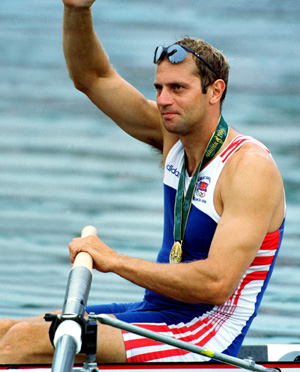
Sir Steve Redgrave: Not as good looking as Ben Fogle, but I've been a fan of Steve's for a long time. I met him about 10 years ago on a sponsored walk for Diabetes UK, and he was lovely. One of very few Olympians with diabetes, he was an inspiration to so many diabetics not to let such a condition stand in the way of his dreams.


Max the Minimed Moose was given to me by a very old friend nearly 15 years ago. He's the mascot of Minimed Medtronic, who make the insulin pump I use, and as you can see in the picture, he has an insulin pump too. On the back of his Tshirt is the slogan: "Don't let diabetes hold you back". And I think of that often when blood sugar levels are conspiring against me. Max is only little, but true to his Canadian roots, he's a great adventurer and loves to throw himself into all sorts of sporting activities. And when things don't go right, he always offers to help by attacking the offending person or thing with his antlers, or jumping up and down on them until they surrender.


CK is a great friend of Max. He's from Australia and has his own TV show called the Koala Brothers, where his screen name is Buster. He's much more laid back and reserved than Max, but as you'll know if you've ever watched the show,  he's always "here to help" and is very good at hugs. Whenever there's a problem, he thinks about it logically and comes up with a practical solution. He's also a very good doctor, and flies around in his plane checking up on anyone with health problems. He's also a big fan of cricket, and loves to umpire with a cold beer in his paw (playing is a bit too tiring, but if you need him to help out, he'll have a go).


Completing the trio is Tigger. As you'd expect, Tigger is very bouncy and is always full of energy. His forte is the motivational side of things and he always advocates self-belief. When you're feeling down and think that something's impossible, or that you just don't want to do it, he'll be there telling you that you can do anythig you put your mind to, as long as you do it with a bounce. He's also very good at pushing people out of bed in the morning when they don't want to get up.