Friday, 1 June 2012

Little bundle of trouble

Adventure travel is, unsurprisingly, a cathartic experience for many, and especially for those who have more problems to overcome than most. But what about the guides and leaders? Those who follow me on Twitter or Facebook will hardly fail to have noticed my excitement at meeting Ben Fogle at a talk he gave at the Royal Geographical Society last night on the topic of adventure travel. Now I really don't go in for celebrity adulation. I used to work for a world famous singer and have met dozens of celebrities from all walks of life. But I couldn't care less about autographs and, having a terrible sense of facial recognition which is actually nothing to do with my sight loss (I scored 1/20 on the official famous faces test recently), I wouldn't even notice if I sat next to a celebrity on the train. But I do have a few heroes, as mentioned in my Inspiration post, and Ben Fogle is one of them. 
 
Why him as opposed to any other adventurer? I'm not sure really. Something about him has always fascinated me and filled me with admiration. No more so than the Extreme Dreams TV series where he led groups of ordinary but troubled souls to do amazing things. Some had mental issues, some had physical ones. Some made it to the end of the challenge, some didn't. I asked him how he felt about these trips, and the people he met on them, and his reply was candid and heartfelt. As an experience, it was tough to be responsible for people with such disabilities or problems, but incredibly mentally rewarding to be responsible for changing their lives. He said he was still in touch with many of them today. But I got the impression that he would not have chosen some of them to go on the trip, and indeed that it was not the right thing either for them or for the rest of the group. Clearly some of them were picked for TV, and because failure and conflict make interesting watching. It also makes the trip seem tougher, and thus more rewarding for those who succeed, if others fail. 
 
In his book The Accidental Adventurer (which I can highly recommend as a thought-provoking as well as interesting book about his various exploits), he writes poignantly about the harrowing experience - both for him and her - of the lady on one of the Extreme Dreams trips who was struggling to come to terms with the death of her husband. She couldn't bring herself to tell the others that he had even died, and talked about him as if he were still alive. You can sense his bitterness towards the production team who insisted that the topic be raised, and who threatened to raise it themselves if he would not. So he was forced to confront her, and actually it not only made good TV, but also probably helped her in the long run. Maybe she needed that push. I know how she felt, I've kept things like that bottled up until someone has finally forced me to open up, and I've always been glad they pushed me, though I've never had to do it on TV! But you can sense that it affected Ben deeply. What makes good TV is definitely not his top priority.
 
 And therein lies the sign of a great leader (though I'm pretty sure Ben is too modest to admit that he is one). As Juan, my Peruvian guide on the Inca trail said, "A good leader should not just be a guide, but a true friend also." I couldn't agree more.
 
 There's something about adventure travel, and for me mountains, that can bring a great unburdening of the soul. A mental as well as a physical release. Maybe it's the wide open spaces, the proximity to nature, the dislocation from the humdrum of daily life, or just being with total strangers, but I've often found myself not only reflecting on life, but opening up to others on such trips. I suspect it's not uncommon for guides to have to deal with this. They meet a lot of people, they witness all sorts of events, and they are usually slow to judge. For me, it stems also from a need to assuage the guilt I feel at putting an extra burden on them due to my disabilities and health problems. In particular, my lack of sight means that, even if surreptitiously, a guide will usually watch out for me far more than for other people. Not that I want them to particularly, but it goes with the territory, and I've had to get used to that. Possibly the fact that I often have to reveal quite personal things to the guide, who after all is there to ensure my safety, brings us that little bit closer.
 
Just writing this post has a somewhat cathartic effect. Thinking back on previous trips and wondering about future trips and how the guides will react to the challenges of having me as a group member brings a lump to my throat and a tear to my eye. Obviously hayfever. But seriously,  I'd love to go on just one trip without all this extra mental burden to those around me. I hope that my guide on Kili will at least get something positive out of the experience of meeting me, to offset in some way the increased burden I put on them, even if it's just the satisfaction of getting me to the top (there is absolutely no doubt that I will make it, unless I actually succumb to serious altitude sickness). I was mortified when Jose, the guide on my recent trip to Spain, called me his "little bundle of trouble" when we kissed goodbye at the airport. I'm sure he meant it kindly, but I still can't help wondering.

Inspiration (part 2)

I've recently started following the exploits of Paul Steele, aka the Bald Hiker, a prolific blogger and allegedly "the world's most influential travel writer". He's currently doing the Exodus trip up Mt Toubkal that I'm planning for September, so I'm following with interest. I also discovered a fabulous video slideshow of his trip up Kili a few years ago. Maybe I'm weird, but it brought tears to my eyes.

Tuesday, 1 May 2012

Inspiration

Inspiration can come from surprising sources sometimes. When things get tough, I like to remind myself of who and what inspires me. Here are some of them, in no particular order.

Ben Fogle: I've always been a huge fan of his. I didn't watch Castaway regularly, but on the episodes I saw, he always caught my eye. OK and he's rather good looking too.....I'm going all the way to London just to hear him give a talk at the Royal Geographical Society in May and I'm very much looking forward to meeting one of my heroes! He's put himself through some incredible challenges, but I think the trips where he's been guiding others, and especially the Extreme Dreams series where he led groups of very diverse ordinary people, but with either physical disabilities or  other mental challenges, on incredible treks really showed his phenomenal mental strength. Turns out he learnt a lot from them too.


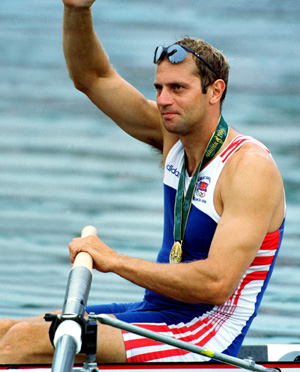
Sir Steve Redgrave: Not as good looking as Ben Fogle, but I've been a fan of Steve's for a long time. I met him about 10 years ago on a sponsored walk for Diabetes UK, and he was lovely. One of very few Olympians with diabetes, he was an inspiration to so many diabetics not to let such a condition stand in the way of his dreams.


Max the Minimed Moose was given to me by a very old friend nearly 15 years ago. He's the mascot of Minimed Medtronic, who make the insulin pump I use, and as you can see in the picture, he has an insulin pump too. On the back of his Tshirt is the slogan: "Don't let diabetes hold you back". And I think of that often when blood sugar levels are conspiring against me. Max is only little, but true to his Canadian roots, he's a great adventurer and loves to throw himself into all sorts of sporting activities. And when things don't go right, he always offers to help by attacking the offending person or thing with his antlers, or jumping up and down on them until they surrender.


CK is a great friend of Max. He's from Australia and has his own TV show called the Koala Brothers, where his screen name is Buster. He's much more laid back and reserved than Max, but as you'll know if you've ever watched the show,  he's always "here to help" and is very good at hugs. Whenever there's a problem, he thinks about it logically and comes up with a practical solution. He's also a very good doctor, and flies around in his plane checking up on anyone with health problems. He's also a big fan of cricket, and loves to umpire with a cold beer in his paw (playing is a bit too tiring, but if you need him to help out, he'll have a go).


Completing the trio is Tigger. As you'd expect, Tigger is very bouncy and is always full of energy. His forte is the motivational side of things and he always advocates self-belief. When you're feeling down and think that something's impossible, or that you just don't want to do it, he'll be there telling you that you can do anythig you put your mind to, as long as you do it with a bounce. He's also very good at pushing people out of bed in the morning when they don't want to get up.

Sunday, 22 April 2012

Choosing a charity

Watching the London Marathon this morning, with several good friends running in it, is inspiring me yet again. But it also brings up that nagging thought that I need to do something about sponsorship. Now I HATE the idea of asking people money for anything, even sponsorship, but it has to be done. One of the main reasons I'm climbing Kili in the first place is to raise money for a charity close to my heart and in some way to give something back to society. It's the main reason I've declined to do many charity events in the past - I'd love to do them but I hate the idea of raising money. Sometimes I just do them and donate the money myself. I've been thinking about doing the Spire-to-Spire walk in September for the Classic FM charity MusicMakers. It would be good training, it's interesting (and appeals since I spent a lot of my childhood singing in Salisbury Cathedral, and have also sung in Winchester Cathedral a few times). But I don't want to ruin my chances of getting sponsorship for Kili by also asking people for money for that! And one of the conditions of doing it is that you have to raise a certain amount of money.

One of the things that's been inspiring me the most recently is the efforts of Exodus' very own Paul Goldstein, who's been lugging a 9 foot high tiger not only up Kili, but also in two marathons. Certainly one way to get people's attention! It looks as if the tiger had a nice sleep on the flight too.


 Anyway, back to the point. The main reason I'm climbing Kili is because I want to give something back to some of the people who've helped me and my family over the years. The trouble is, there are so many, and it's taken a lot of thought to decide which charity I want to raise money for. The shortlist came down to the following (in no particular order):
- Diabetes UK. I've been a life member since 1980, and back then, they were the only contact I had with anything diabetes-related. I remember reading their newsppaper (before it became a magazine) avidly under the bedclothes at night when I was supposed to be asleep. It made me realise that I wasn't alone with this disease. Even though my dad had had diabetes most of his life (and all of mine), it wasn't something we talked about in the family.
- JDRF (Juvenile Diabetes Research Foundation). I only discovered this charity much later, when a friend told me about them. Contrary to Diabetes UK, which caters very much for the masses, and whose magazine and advice are largely written in words of one syllable, JDRF focuses primarily on research, and funds many great research programmes, while keeping those who are interested up to date with this, rather than Diabetes UK's focus on things like recipes and easy guides.
- Insulin Pumpers. Along with one of my closest friends, John Neale (who sadly died of brain cancer a few years ago), I set up the UK branch of the US charity Insulin Pumpers around 15 years ago, and still run the website, mailing list and everything else on the UK side. Getting an insulin pump (thanks to John) was the best thing I ever did, and it undoubtedly saved me from going totally blind and losing my kidneys. Insulin Pumpers is a fantastic source of support and advice about pumps, and I owe it a lot.
- RNIB. When I lost most of my sight 15 years ago, RNIB were another godsend, providing so much help, information and support.
- Guide Dogs for the Blind. When I was told that I would lose all my sight, I investigated the possibility of a guide dog, and even went through the assessment programme. Although I'm not really a dog lover (I'd much rather have a guide cat!) I have friends with guide dogs and I can see how much they can transform a blind person's life. It turned out that for various reasons, a guide dog wasn't for me right now, but it may be something I'll reconsider in the future.
- Limbless Association. I hope I'll never need their help, but it's quite possible I will one day. More importantly, however, this brings me to one of the other main reasons for climbing Kili. In the last 18 months my father, a type 1 diabetic for nearly 60 years, lost both his legs as a result of diabetes complications, and may face further amputation. He has always taught me by example that you shouldn't let diabetes get in the way of doing whatever you want to do. He may not have climbed Kili, but he's done plenty of amazing things and travelled all over the world, mostly at a time when diabetes management was far more rudimentary than it is now. His courage and determination to carry on as normal a life as possible after double amputation is absolutely inspirational. Another very good friend (and former dance partner) also lost a leg to cancer a few years ago, and similarly, his determination and courage inspired me greatly at the time when I had just lost a lot of my sight and was struggling to come to terms with it. Apparently we were mutual sources of inspiration to each other in this respect.

So there we go. So many charities, but I don't think it's fair to support more than one. So I'm going for the charity that for me somehow encompasses everything. The more research we do into the causes, preventions and cures for diabetes, the less we'll have to worry about blindness and amputations. So I shall be raising money for the JDRF. Not just because their mascot is Pingu.


Sunday, 8 April 2012

I think I'm addicted to mountains

What a fabulous place the Sierra de Aitana is! I loved every minute of the trekking holiday - fantastic vistas, great company and an amazing leader who I just couldn't fault on any level. His passion for the area and for mountains really rubbed off on me too.  My main aim was to use the trip as training for Kili, but I ended up enjoying it far too much.


Things I learnt about trekking in the mountains:
- I really need some lighter boots (and socks) for walking when it's hot.
- Vaseline smeared on your feet before a long day of walking really helps avoid blisters. As do two pairs of socks. Many people suffered, I did not.
- Take plenty of zinc oxide tape and apply it to any "hot spots" on your feet long before blisters appear.
- My calf muscles were agony by the last couple of days of walking. I need to seriously strengthen them. Massaging and stretching them at night and in the morning is really important too.
- However, avoid dogs when stretching (see photo).
- I learnt a better way to use my walking poles (wearing the straps differently around my hands). Worked very well and saved my shoulders, once I got used to it.
- Prevention is better than cure for dehydration. I got it right this time. Finally.
- Mess around with insulin and carbs as little as possible. 50% basal rate all day while actually walking worked very well (took me a few days to figure that out). Take normal insulin for breakfast but then turn pump right down to 50% immediately. For long periods of stiff climbing, have some ready glucose to hand. 50% bolus for lunch also works very well. Keeping it simple really helps. Overnight basal is more trial and error - try 75% basal and drop further as necessary.
- My fitness was actually pretty good although I'm slow up hills. But 8 hours of walking a day was no problem, I could have kept going for quite a few more hours. Need to practise walking up hills faster though.
- Keeping an SPF lip balm easily accessible is crucial. SPF 30 suncream for the face also crucial.

Now looking at booking another cheeky holiday in summer in the mountains - possibly Mt Toubkal to get some more experience of altitude. http://www.exodus.co.uk/holidays/tmm/overview


Or maybe Mt Blanc....OK, I really am addicted.

Friday, 23 March 2012

It's not quite Kili...

but it's been 3 months since I went on a walking holiday, so I reckon it's about time for another one. All in the name of training, obviously, nothing to do with having fun. So I'm off to the Sierra de Aitana (don't worry, no one I've met so far has ever heard of it either, not even Spanish people) for a week's meandering among the Spanish peaks.
Puig Campana (in the picture) is one of the 5 peaks I'll be climbing. It looks a little scary from here, though it's only 1406 metres. So we'll be doing that before breakfast as a warmup then.

 Shame I haven't got any new equipment to try out, as this would be a good opportunity. But the 8 hour days will be a good test of my current stamina. The final day's climb on Kili is something like 18 hours, so I need to get in some preparation. I've currently been doing only 5-6 hour walks in the Peaks (given the train service and the short winter days), but then again, when there's only 1 or 2 of us, we barely stop for lunch, let alone a break. With a group of 10 or so, the breaks are usually substantially more as you wait for people to catch up.

I'd better get packing. Sod's law, my flight is at 6.30am on Sunday morning, but because the clocks go forward, it's really only 5.30am. I only ever get up this early when sport or adventure are involved! I dread to think what getting up and starting the final ascent of Kili at midnight in the freezing cold and pitch dark is going to be like though. Much mental strength will be needed!

Saturday, 10 March 2012

Imagine an arthritic 90-year-old walking backwards, and you're going too fast.


That's the advice given by Jon Garside, training officer of the British Mountaineering Council, who has led numerous groups up Kilimanjaro. Sounds like a barrel of laughs, especially when you realise that the ascent will be in pitch darkness, snow, and freezing temperatures down to about -30 degrees C. After my experience on the Inca Trail climbing Dead Woman's Pass with a stomach bug, nauseous, severely dehydrated and combatting the effects of altitude, I know what it's like to climb at a rate of 5-10 seconds per step, freezing cold, soaking wet, gasping for breath, and trying to find the will to make the next step. It wasn't fun. Having already lost consciousness a few dozen yards from the top, and with the cold and rain, I felt no satisfaction in reaching the top (I still had a couple of hours' descent ahead of me, possibly in the dark, and I was still battling with a bad stomach). I'm very sure that reaching the summit of Kili will feel vastly different though, however tough the climb is. Meanwhile I'm practising testing my willpower by making myself do all kinds of things which I really don't want to do. Walking the couple of miles home rather than taking the bus when it's late at night, freezing cold and pouring with rain, with every step I remind myself that climbing Kili will be far worse than this, so I should just get on with it and stop whingeing. On Thursday night I forced myself to carry on the remaining 30 minutes of a spin class even though my blood sugar was low and I felt like lying down and closing my eyes (for the worried amongst you about the wisdom of this, I had taken plenty of glucose and turned my insulin pump off, so I wasn't actually going to lose consciousness by carrying on, it just felt like it). At least this willpower testing is doing my training no end of good, by forcing me to carry on when I'd normally just give up. I'm sure it's a good philosophy for life.

Oh, and this is the old lady I shall be imagining. If she can do it....